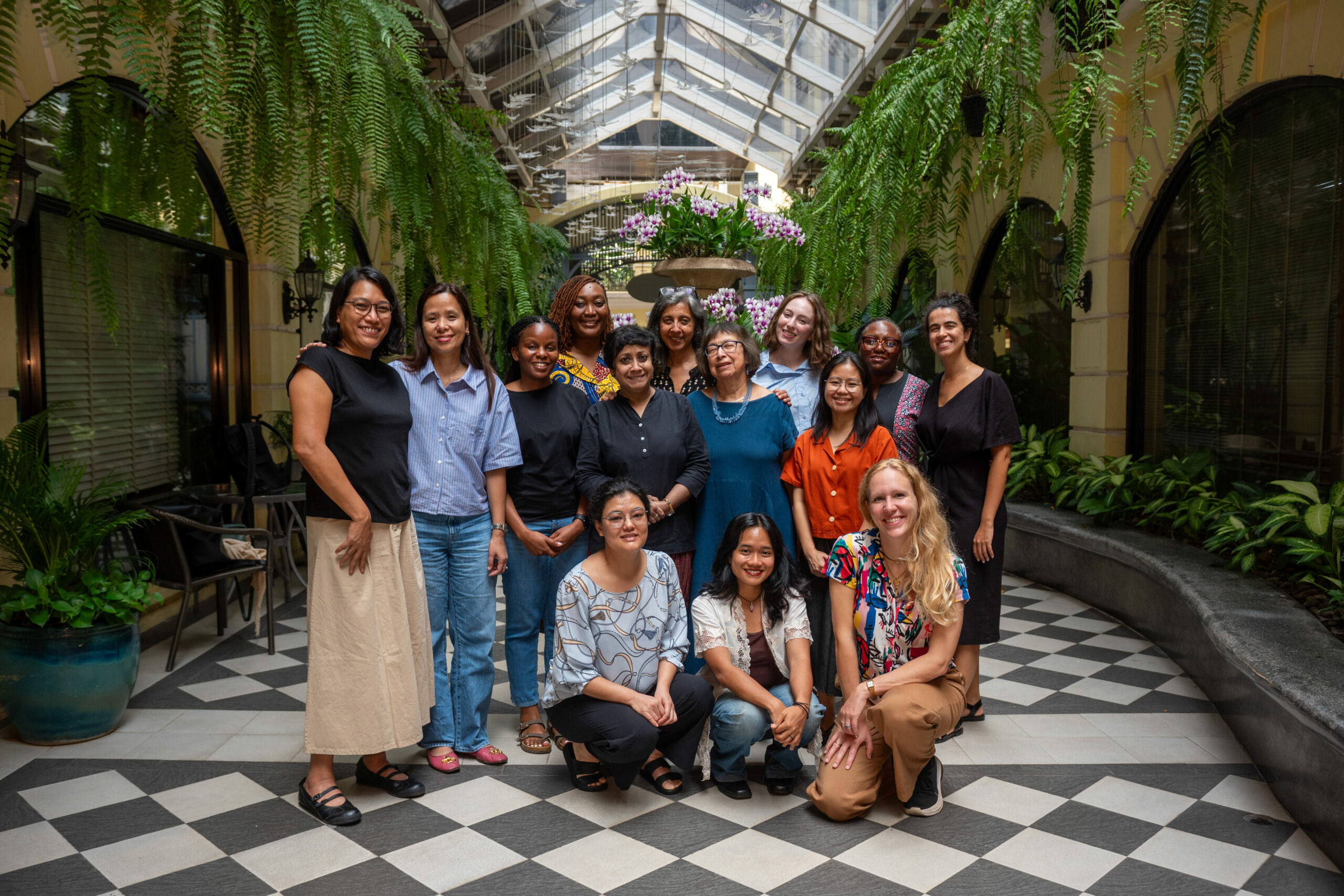
The Gender and Trade Coalition (GTC) convened its fifth strategy meeting from 10-11 October 2026, just ahead of the IMF/World Bank Annual Meetings in Bangkok, Thailand. Building on a solid period of collaborative work, over 20 members and allies from within and beyond the Coalition joined the hybrid space to reflect on our efforts, strengthen our analysis to advance feminist trade justice, and organize collective resistance.
The meeting opened with a recap of GTC accomplishments since the previous strategy meeting, which include the publication of our feminist trade ‘explainer’ series and feminist Trade Agenda in four languages, as well as various public-facing events and statements in multilateral fora. Next, GTC Steering Group members from Asia, Pacific, Africa, and Europe shared the latest trade-related developments and their gender impacts in their respective regions, as well as how their organizations have been working to address these issues. In the roundtable-style session, allies also shared updates about their recent trade-related work and plans for the year ahead. Based on these updates, the following session focused on connecting the GTC and members’ core areas of work to those of the allies. Climate and critical minerals emerged as the strongest threads, cutting across all the discussed issues. Finally, participants ended the day by discussing strategies for responding to the regional and thematic developments shared, including ways we can collaborate cross-regionally and across issues, especially in the context of the IMF/World Bank Annual Meetings. A series of events and joint advocacy moments were identified and mapped. The space provided during this first day of the meeting was valuable for broadening the dialogue and analysis that link trade and gender to other issues, and for developing a common agenda with organizations from diverse contexts.
On day 2, attended only by GTC Steering Group members, participants discussed joint advocacy and publication strategies, and mapped out relevant fora and opportunities for engagement in the coming year. Plans include further developing a new policy brief series on key free trade agreements, which premiered in November 2026 with “The EU-Mercosur Free Trade Agreement: A Feminist Analysis,” a Gender and Trade Coalition publication produced by Public Services International (PSI) and Women in Development Europe+ (WIDE+). This second day was particularly significant for highlighting areas of collective interest to be further explored through analytical work—such as the history of resistance to the neoliberal free trade regime led by feminists from the Global South—and for charting the path we will follow in the next year of our journey advancing feminist trade justice.
Convenors