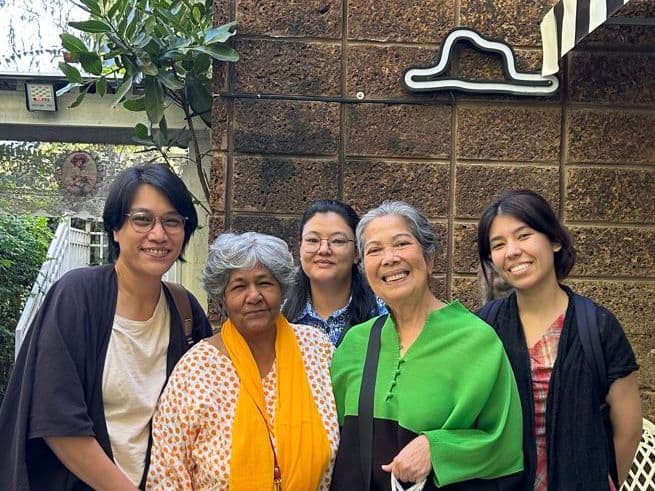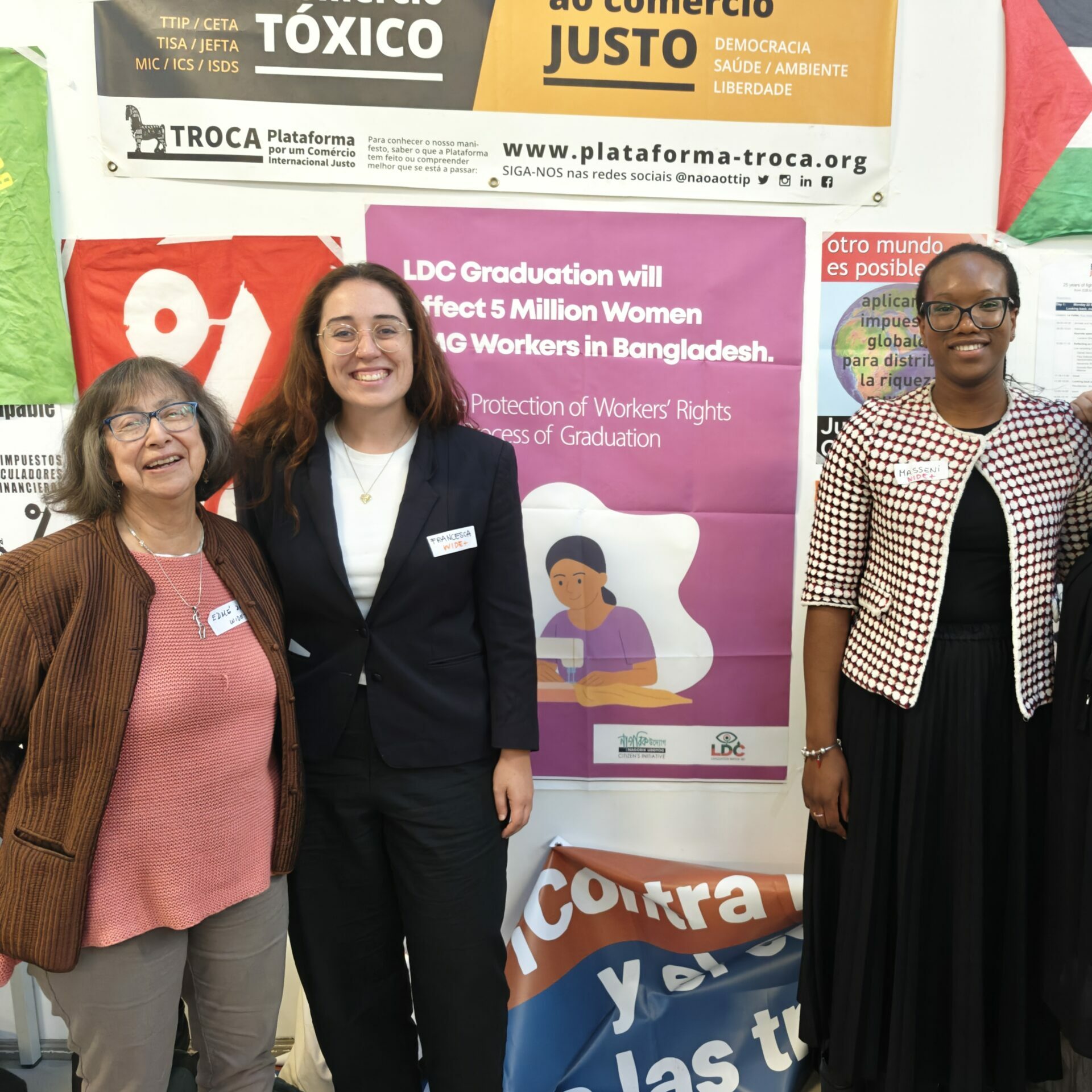

Edmé Dominguez is WIDE+’s representative in the European Union Domestic Advisory Groups with American countries. WIDE+ has been a member of the Gender and Trade Coalition since 2018, and is currently one of our 13 Steering Committee Group members.
How did your organization come to work on gender and trade justice?
Women in Development Europe (WIDE) was founded in the mid-1980s to put forward feminist economics perspectives at both European and international levels. Its work included popular education on feminist economics and gender-related trade issues. Over 25+ years, WIDE developed educational materials and programs on feminist economic literacy across Europe and Central and South America. It also helped establish networks like the Red de Género y Comercio (Gender and Trade Network) in Latin America.
After WIDE ceased operations in 2010, Women in Development Europe+ (WIDE+) emerged as a network of associations that fight for women’s rights, with the Gender and Trade group among the first reconstituted working groups. The group brought together academics, experts, activists, and professionals from institutions like the International Labour Organization (ILO) to analyze trade agreements, processes, and policies through a gender lens. Since then, we have produced numerous resources that integrate feminist perspectives into trade justice, including working papers, studies, articles, statements, and webinars - all available on the WIDE+ website.
What are some of your recent actions and/or achievements in the struggle towards gender and trade justice?
Since May 2023, WIDE+ has been actively engaged in three Domestic Advisory Groups (DAGs), which advise the European Union (EU) on implementing trade agreements. These groups monitor the Trade and Sustainable Development (TSD) chapters of the different Free Trade Agreements (FTAs) between the EU and various countries and regions. WIDE+ represents civil society in the DAGs for the EU-Central America, EU-Colombia, Ecuador and Peru, and EU-Canada FTAs. However, our experience - particularly with the first two - has been frustrating. Conflicting interests within DAGs between business and other civil society organizations make unified recommendations rare, and gender issues are largely overlooked. Nevertheless, we remain focused on our advocacy.
For instance, in July 2024, the WIDE+ Gender and Trade working group participated in the International Association for Feminist Economics (IAFFE) Annual Conference in Rome, and organized a session and a panel discussion on gender and trade policy issues across different regions. We also organized and hosted a four-part webinar series on the gender impacts of the EU-Mexico Association Agreement in the fall of 2024. Additionally, we recently engaged and contributed to different gender and trade-related initiatives, such as a two-part online discussion organized by Action Aid on the Due Diligence Directive; a webinar in collaboration with WO=MEN, the Dutch Gender Platform, on the gender chapter of the EU-Chile trade agreement; and a consultancy with the International Trade Committee of the European Parliament (INTA) to update their Gender Action Plan. For more information on all our activities, check our webpage.
In your opinion, what is the GTC’s contribution to fighting against unjust trade policies?
The GTC contributes to the fight against unjust trade policies by raising global awareness of the link between gender and trade. By providing educational and advocacy resources—such as explainers, webinars, seminars, and conferences—the GTC supports women’s rights and international non-governmental organizations in their broader struggle for economic justice. Furthermore, by creating these awareness-raising resources, the GTC strengthens its members' engagement with key international institutions such as the World Trade Organization (WTO), the European Union, the United Nations Conference on Trade and Development (UNCTAD), and the World Bank.